What Are You Looking For?
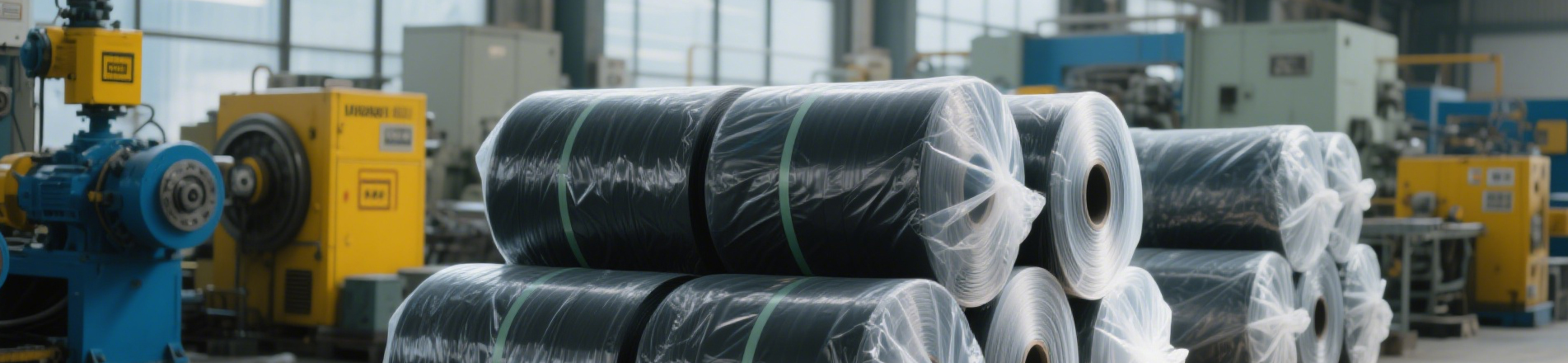
Ferrite Flexible Magnet (Industrial / General Purpose) – Technical Support
1. What Is a Ferrite Flexible Magnet?
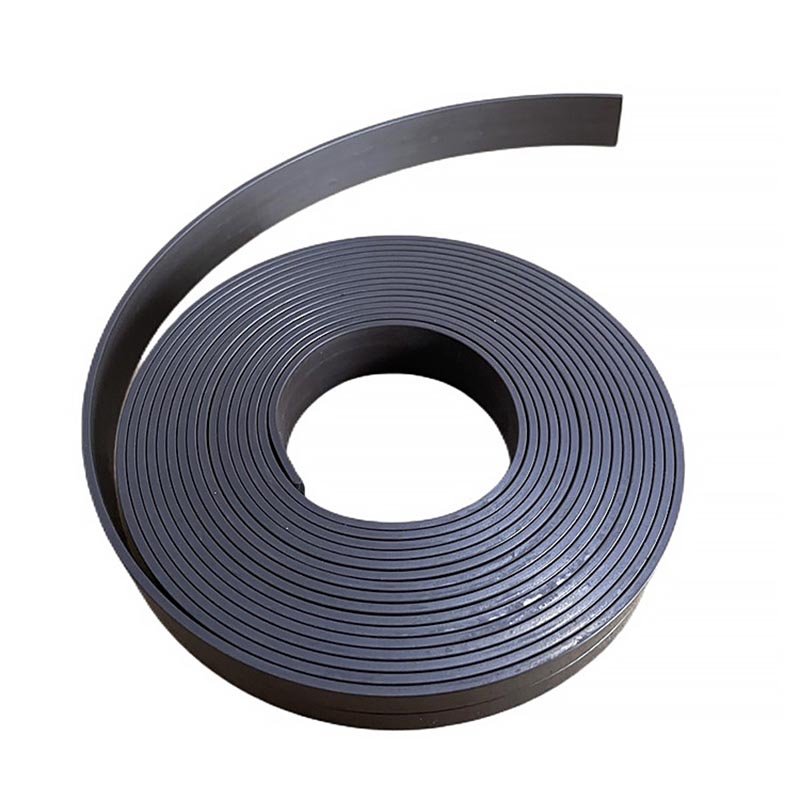
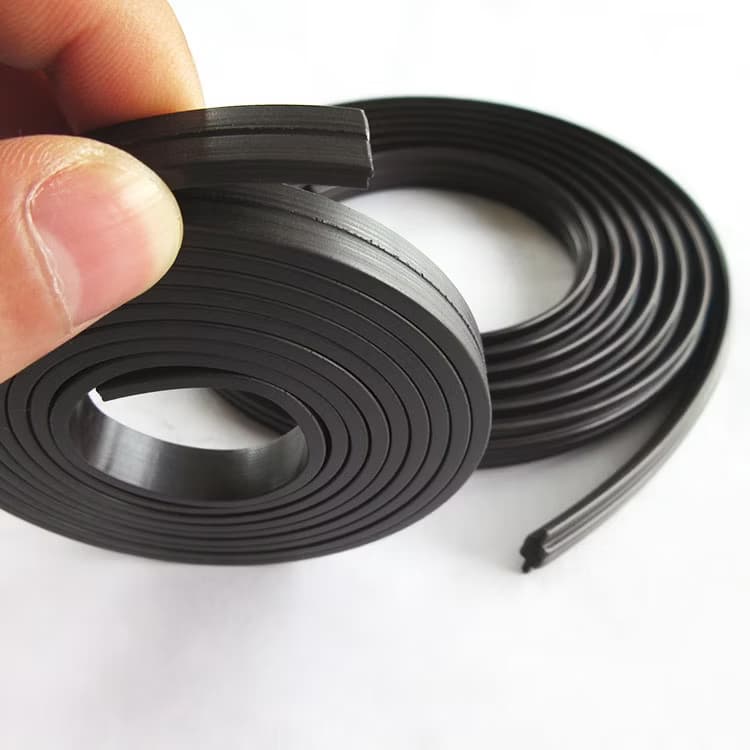
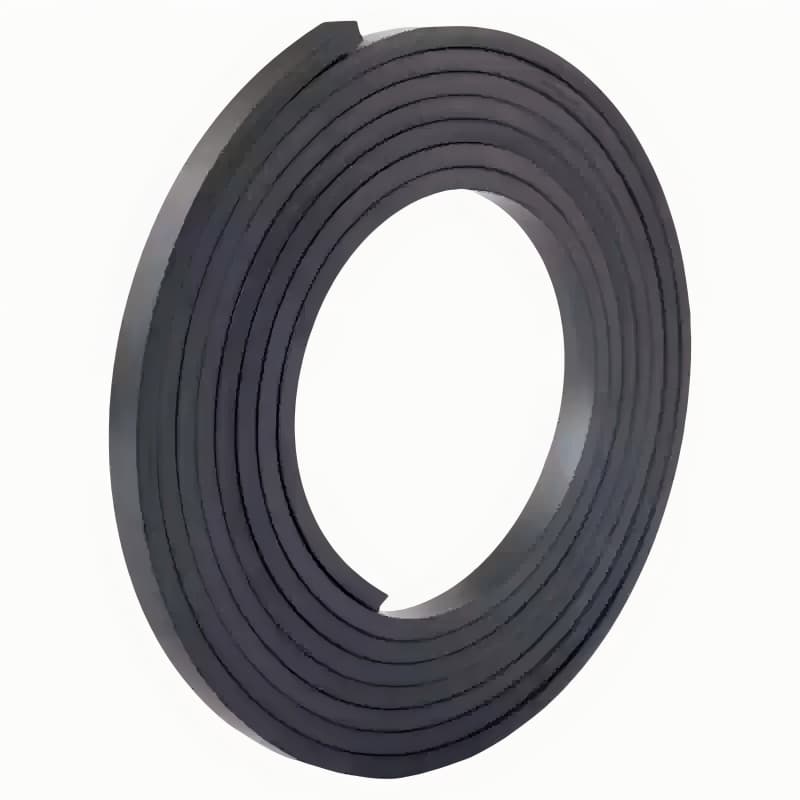
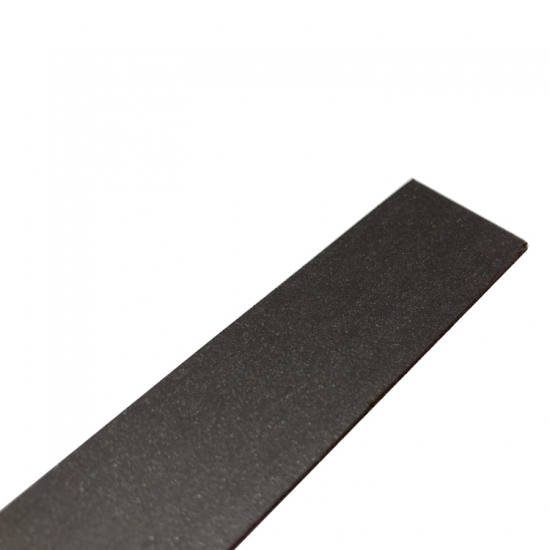
A ferrite flexible magnet is a composite magnetic material made from ferrite magnetic powder (strontium or barium ferrite) dispersed in a flexible polymer matrix (such as CPE, PVC, or NBR), manufactured by extrusion or calendering. It is the most common type of “rubber magnet”, also known as flexible magnet, rubber magnet, or magnetic rubber.
Compared with neodymium flexible magnets, ferrite flexible magnets have weaker magnetic force (about 1/5 to 1/10 of NdFeB), but offer low cost, excellent corrosion resistance, good demagnetization resistance, and outstanding flexibility. They are widely used in refrigerator door seals, whiteboard strips, motor magnet rings, advertising displays, teaching aids, and many other applications.
💡 Industrial value: In applications where extremely high magnetic force is not required, ferrite flexible magnets provide the most economical magnetic solution – they do not rust, are easy to process, and have a long service life.
2. Key Features & Technical Advantages
| Feature | Industrial / General‑Purpose Benefit |
|---|---|
| Low cost | Abundant raw materials and mature production process – the first choice for high‑volume applications |
| Excellent demagnetization resistance | High coercivity – not easily demagnetized by reverse fields or impact |
| Flexible & cuttable | Can be cut with scissors or die‑press into any shape – adapts to various structures |
| Good corrosion resistance | Ferrite itself does not rust – no additional coating needed, suitable for humid environments |
| Multi‑pole magnetization | Supports single‑side multi‑pole pattern – used in magnetic encoders, door switches, speed sensors |
| Laminatable / printable surface | Can be PVC‑laminated, printed, or adhesive‑backed for decoration and installation |
| Wide operating temperature | Standard -40°C ~ +80°C; some grades up to +120°C |
| Environmental compliance | RoHS, REACH compliant – can be used for toys and food‑contact surfaces (check applicable standards) |
3. Technical Specifications (Industrial Parameter Table)
| Parameter | Typical Value / Range | Remarks |
|---|---|---|
| Composite material | SrFe ferrite powder + CPE / PVC / NBR | CPE most common; NBR for oil resistance |
| Magnetization type | Isotropic or Anisotropic | Anisotropic gives stronger magnetism |
| Isotropic surface flux | Approx. 400 – 600 Gauss (0.04 – 0.06 T) | Weaker, lowest cost |
| Anisotropic surface flux | Approx. 800 – 1200 Gauss (0.08 – 0.12 T) | Stronger, most widely used |
| Max. energy product (Isotropic) | 6 – 10 kJ/m³ (0.75 – 1.25 MGOe) | |
| Max. energy product (Anisotropic) | 12 – 18 kJ/m³ (1.5 – 2.3 MGOe) | |
| Intrinsic coercivity Hcj | ≥ 240 kA/m (≥ 3.0 kOe) | Good demagnetization resistance |
| Working temperature range | -40°C ~ +80°C | Standard grade |
| High‑temp grade (optional) | Up to +120°C | Special formula required |
| Thickness range | 0.3 mm – 10 mm | Common: 0.5 / 0.8 / 1.0 / 1.5 / 2.0 / 3.0 mm |
| Width range | 2 mm – 1200 mm (rolls/sheets) | Cuttable |
| Hardness (Shore A) | 65 – 85 | |
| Density | 3.6 – 4.2 g/cm³ | |
| Tensile strength | ≥ 5 MPa | |
| Elongation at break | ≥ 120% | |
| Pressure‑sensitive adhesive | Optional (single / double‑sided) | 3M or domestic acrylic adhesive |
| Surface finish | Bare / PVC‑laminated / colour printed / UV coated |
📄 Available documents: Technical Data Sheet (TDS), Material Safety Data Sheet (MSDS), RoHS/REACH declarations, magnetic performance curves.
4. Typical Industrial & General Applications
🏭 Industrial Equipment & Mechatronics
| Application Area | Specific Use | Recommended Specification |
|---|---|---|
| Refrigerator/freezer door seals | Magnetic gaskets with embedded flexible strip | Anisotropic strip, thickness 1.0-2.0 mm, width 5-15 mm |
| Motors & sensors | Micro DC motor rotor strips, Hall sensor trigger strips, speed sensors | Anisotropic multi‑pole, thickness 1.0-2.5 mm |
| Industrial door / cabinet seals | Control cabinets, switchgear, telecom enclosures | Anisotropic strip with PSA, thickness 1.5-3.0 mm |
| Magnetic encoders | Multi‑pole rings/strips for rotary encoders | Anisotropic, high‑precision multi‑pole magnetization |
| Conveying equipment | Ferrous debris separation, belt conveyor magnetic guides | Anisotropic sheet/strip with wear‑resistant coating |
🧲 Advertising & Display
| Application | Specific Product | Recommended Specification |
|---|---|---|
| Fridge magnets | Promotional gifts, custom logo magnets | Isotropic sheet, thickness 0.5-0.8 mm |
| Magnetic car signs | Real estate, delivery, emergency vehicle signs | Anisotropic sheet, thickness 0.7-1.0 mm, UV‑laminated |
| POP displays | Shelf edge labels, promotional magnetic holders | Isotropic or anisotropic strip with PSA |
| Printable magnetic sheets | Home/office DIY, teaching materials | A4/A3 printable sheet, isotropic |
🏠 Daily Life & Office
| Application | Specific Product |
|---|---|
| Whiteboard magnetic strips | Hold papers on the back of whiteboards |
| Office magnets | Magnetic bookmarks, folder clips |
| Kitchen storage | Magnetic knife strips, spice jar magnets |
| Teaching aids | Magnetic letters, numbers, shapes |
5. Installation & Usage Guide
5.1 Cutting & Shaping
5.2 Applying Adhesive (if PSA option chosen)
5.3 Magnetic Force Usage Notes
⚠️ Safety note: Strong magnets (thick anisotropic strips) may interfere with pacemakers, credit cards, mechanical watches, hard drives. Keep at least 50 mm away.
6. Troubleshooting Common Issues
| Problem | Possible Cause | Solution |
|---|---|---|
| Weak magnetic force, won't hold | Isotropic used where stronger force needed | Switch to anisotropic |
| Thickness too thin (<0.5 mm) | Increase thickness | |
| Thick paint or uneven mounting surface | Reduce air gap; contact bare steel directly | |
| Surface is non‑ferromagnetic (aluminium, SS304) | Change attachment point; add steel backing plate | |
| Adhesive fails | Surface not clean | Degrease thoroughly; lightly abrade surface |
| Excessive shear load | Add mechanical fixing; switch to structural adhesive | |
| Strip cracks | Bend radius too small (<5× thickness) | Increase bend radius |
| Low‑temperature stress | Select low‑temperature‑tolerant grade | |
| Printed pattern fades | No lamination, UV exposure | Apply UV‑protective laminate |
| Multi‑pole signal uneven | Worn magnetization fixture or pole pitch deviation | Return to factory for re‑magnetization |
7. Certifications & Quality Assurance
| Certification / Test | Description |
|---|---|
| ISO 9001:2015 | Quality management system |
| RoHS 2.0 | Restriction of hazardous substances (Pb, Hg, Cd, CrVI, PBB, PBDE) |
| REACH | Chemicals registration – SVHC list available |
| EN71 (available on request) | Toy safety standard – for educational magnets |
| UL 94 HB/V-2 (optional) | Flammability rating |
| Salt spray test | According to ASTM B117 – ≥48 hours no rust |
Batch release tests:
8. Frequently Asked Questions (FAQ)
Q1: What is the difference between Isotropic and Anisotropic ferrite flexible magnets?
| Aspect | Isotropic | Anisotropic |
|---|---|---|
| Magnetization direction | Non‑oriented – can be magnetized in any direction | Oriented – requires a specific direction |
| Surface field | 400‑600 Gauss | 800‑1200 Gauss |
| Max. energy product | 6‑10 kJ/m³ | 12‑18 kJ/m³ |
| Cost | Low | Medium (approx. 1.5‑2× isotropic) |
| Typical applications | Fridge magnets, printable sheets, teaching magnets | Door seals, motor strips, car signs |
Q2: Do ferrite flexible magnets rust?
No. Ferrite powder is a ceramic material – it does not rust. The polymer matrix is also non‑corrosive. No coating is needed, and they can be used in humid environments.
Q3: Can you custom die‑cut special shapes?
Yes. We offer steel‑rule dies for any 2D shape (circles, squares, logos, animals, etc.). MOQ is typically 5,000+ pieces.
Q4: Can adhesive be applied? What temperature can it withstand?
Yes. Standard PSA is acrylic‑based – short‑term up to 100°C, long‑term up to 80°C. 3M™ tape (e.g., 467/468) is available for higher requirements.
Q5: Can you print directly on the magnet?
Yes. Screen‑printing, UV inkjet, or coloured PVC lamination are available. For outdoor use, a UV‑protective laminate is recommended.
Q6: Can I get samples?
Yes. Free samples of standard sizes (A4 sheets, common strip widths) are available – you pay only shipping. Custom samples require a small tooling fee, refundable against production orders.
Q7: What are your MOQ?
Q8: How do I request a quote?
Email us with:
We will reply within 24 hours.
9. Need Technical Support or a Custom Solution?
Our technical team can help with:
Free technical consultation – find the most economical and reliable ferrite flexible magnet solution for your needs.


 IPv6 network supported