What Are You Looking For?
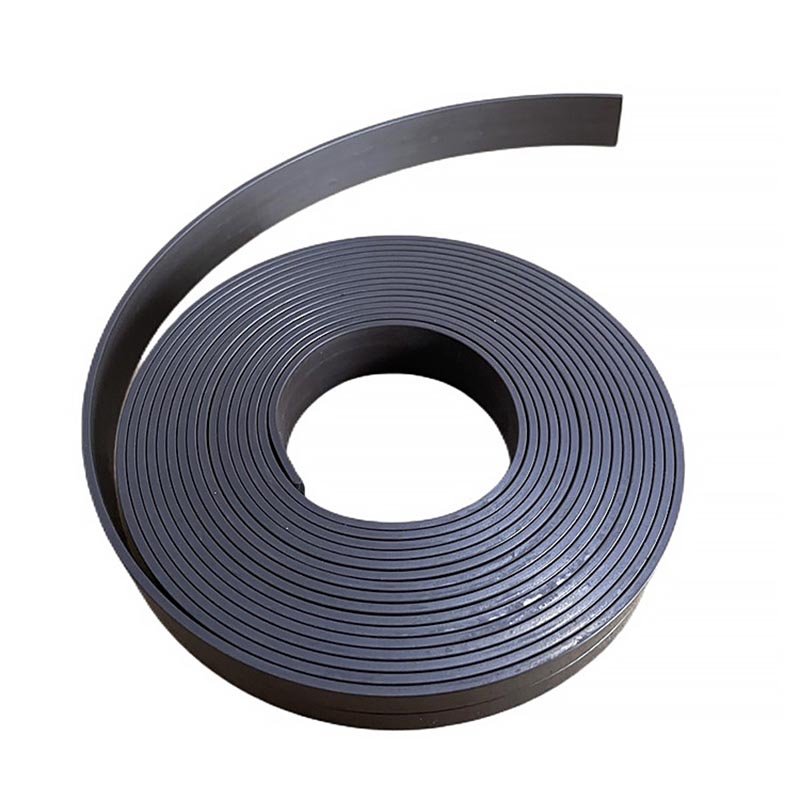
Factory Supply REACH Compliant Strontium Flexible Magnet Strips, Multi-Pole Magnetized for Sensors
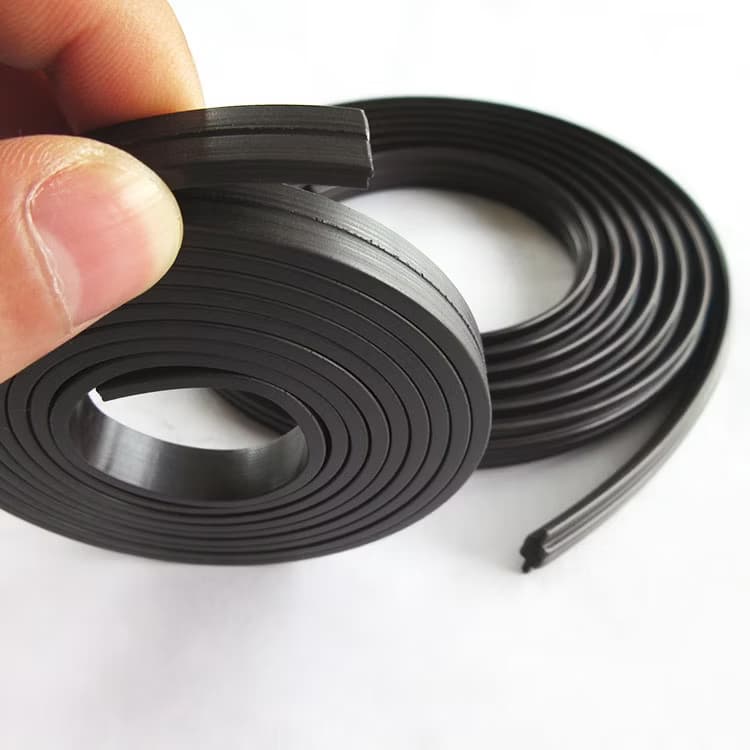
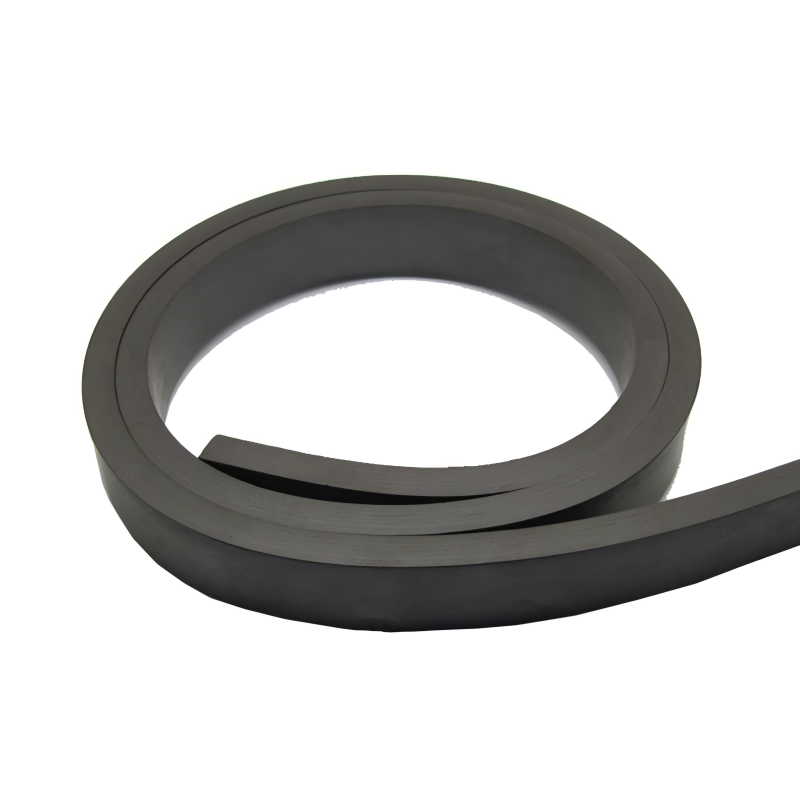
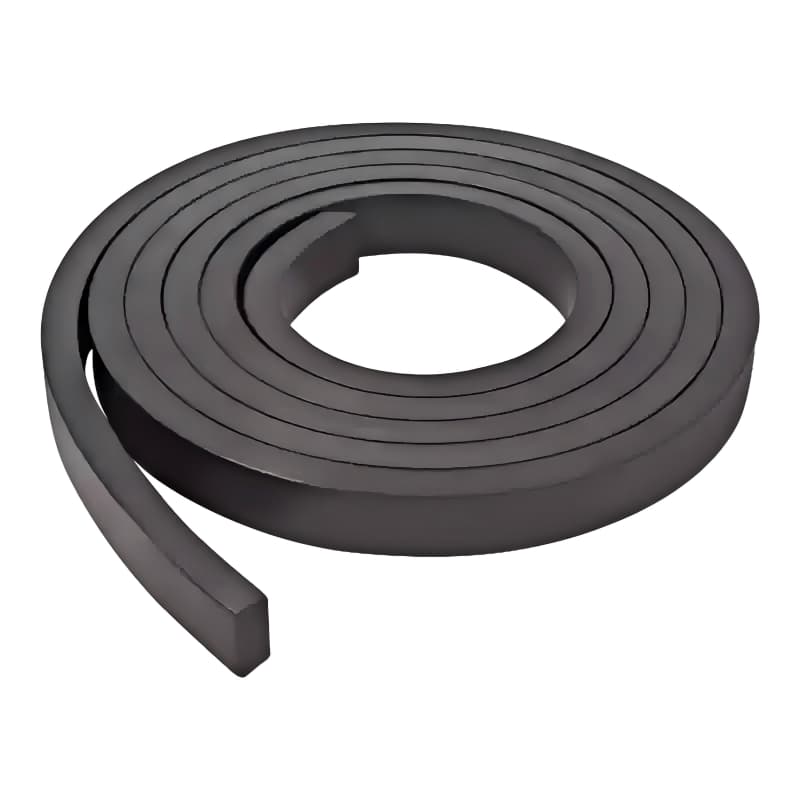
Eco‑friendly strontium ferrite rubber magnet – heavy metal free, RoHS compliant – delivers stable signals for encoders, speed sensors, and position sensors with excellent cost‑performance and environmental tolerance.
Packaging :
Bulk packing, cartonsPayment :
100% T/T in advanceProduct Origin :
ChinaDelivery Time :
15-30 days, depends on the quantityBrand :
KINGSMAGNETBulk Order MOQ :
100 ROLLSSample Order :
Please inquire1. Product Overview
Strontium ferrite rubber magnet is made by compounding strontium ferrite (SrO·6Fe₂O₃) magnetic powder with a flexible rubber matrix (such as CPE, NBR, or PVC) through calendering, extrusion, or injection molding processes. Compared to barium ferrite, strontium ferrite offers superior magnetic performance, higher coercivity, and is a more environmentally friendly choice – strontium materials contain no heavy metal impurities, are fully recyclable, and comply with RoHS and REACH standards. With equivalent magnetic performance requirements, strontium ferrite requires less magnetic powder, consumes less energy, and leaves a smaller carbon footprint.
2. Key Features & Sensor Application Advantages
| Feature | Value for Sensor Applications |
|---|---|
| ✅ Environmentally friendly | Strontium ferrite contains no heavy metals; production has lower energy consumption and reduced carbon footprint |
| ✅ Extremely low cost | Abundant raw materials – the first choice for high-volume, cost-sensitive sensor applications |
| ✅ Flexible & bendable | Conforms to curved, cylindrical, or irregular surfaces – easy installation |
| ✅ Multi-pole magnetization capability | Supports 2–24 poles along length or circumference – minimum pole pitch ≥1 mm |
| ✅ Fracture resistance | No brittle breakage risk – suitable for vibrating environments and moving parts |
| ✅ Excellent corrosion resistance | Strontium ferrite does not rust – no additional coating needed, ideal for humid and outdoor use |
| ✅ Wide operating temperature | -40°C ~ +80°C (some grades up to +100°C) |
| ✅ Lightweight | Density of only 3.5–3.8 g/cm³ – supports device miniaturization |
| ✅ Strong weather resistance | Withstands temperature changes and various chemicals – suitable for harsh environments and outdoor installation |
3. Technical Specifications (Sensor Application Grade)
3.1 Basic Physical Parameters
3.2 Magnetic Properties (Sensor Grades)
| Grade | Type | Br (mT) | Br (Gs) | Hcb (kA/m) | Hcj (kA/m) | (BH)max (MGOe) |
|---|---|---|---|---|---|---|
| Isotropic Grade | Isotropic | 175–195 | 1750–1950 | 125–140 | 150–175 | 0.56–0.58 |
| Anisotropic Grade | Anisotropic | 225–270 | 2250–2700 | 159–199 | ≥255 | 1.3–1.7 |
📄 Strontium ferrite rubber magnets typically offer an energy product range of 0.60–1.50 MGOe. Anisotropic grades are recommended for sensor applications – they deliver significantly stronger and more stable signals than isotropic grades.
3.3 Sensor Signal Characteristics
| Parameter | Typical Value | Notes |
|---|---|---|
| Multi-pole pitch accuracy | ±0.1 mm | Standard industrial grade |
| Surface field (1mm thick, 0.5mm air gap) | 80–120 mT (anisotropic) | Hall sensors typically need 20–50 mT to trigger |
| Temperature coefficient of Br | -0.2 ~ -0.3 %/°C | Field drops ~12–18% at 80°C |
4. Typical Sensor Applications
4.1 Magnetic Encoders
Strontium ferrite rubber magnet rings, after proper magnetization, can serve as magnetic encoder rings for reading angular displacement, speed, or acceleration. These encoder rings are integrated into hub bearings and rotate with the wheel, with sensors detecting pole changes to determine wheel speed. Strontium ferrite magnetic scales are the only domestically produced rubber magnetic scales with full intellectual property rights, offering strong environmental tolerance and practical reliability.
Typical applications:
4.2 Speed Sensors
Strontium ferrite rubber magnet strips serve as multi-pole magnetic sources working with Hall sensors to detect rotational speed.
Typical applications:
Recommended form: Multi-pole magnet strip (alternating along length)
4.3 Position Sensors & Proximity Switches
Strontium ferrite rubber magnet sheets/strips provide stable trigger fields for non-contact position detection.
Recommended form: Single-pole magnet sheet/strip
4.4 Pressure / Photo Sensors
Rubber ferrite composite materials can serve as pressure/photo sensors, with pressure and light signals read in non-contact mode through Hall elements.
Typical applications:
Recommended form: Flexible magnet sheet (special composite material)
5. Selection Guide: Choosing the Right Strontium Ferrite Rubber Magnet for Sensor Applications5.1 Core Selection Factors
1. Magnetization Type – Isotropic vs. Anisotropic
2. Form Selection – Match Sensor Structure
3. Pole Count and Pitch – Affects Resolution
4. Operating Temperature
5.2 Selection Guide by Sensor Type
| Sensor Type | Recommended Type | Recommended Form | Recommended Poles | Notes |
|---|---|---|---|---|
| Incremental encoder | Anisotropic | Multi-pole ring | 8–64 | Medium resolution |
| Speed sensor | Anisotropic | Multi-pole strip | 4–24 | Stable signal frequency |
| Linear displacement sensor | Anisotropic | Multi-pole strip | Pitch 1–5mm | Strong environmental tolerance |
| Proximity switch | Isotropic or Anisotropic | Single-pole sheet | — | Trigger signal sufficient |
| Wheel speed sensor | Anisotropic | Multi-pole ring | 32–128 | Automotive-grade reliability |
5.3 Ferrite vs. NdFeB – Sensor Selection Comparison
| Comparison | Strontium Ferrite Rubber Magnet | NdFeB Rubber Magnet |
|---|---|---|
| Max. energy product | 0.6–1.5 MGOe | 2.0–8.5 MGOe |
| Surface field | 80–120 mT | 180–250 mT |
| Cost | Very low | Medium (3–10× ferrite) |
| Temperature stability | Excellent (higher Curie temperature) | Moderate (requires temperature control) |
| Corrosion resistance | Excellent (no coating needed) | Requires rubber encapsulation |
| Environmental friendliness | ♻️ Higher – no heavy metals, recyclable | Lower – contains rare earths |
| Suitable sensors | Low/medium precision, cost-sensitive | High precision, high resolution |
💡 Selection advice: When sensor precision requirements are moderate, operating environments are harsh (humid, high temperature), and cost is a concern – strontium ferrite rubber magnets are the best choice. For high-resolution encoders and high-precision position sensors, NdFeB rubber magnets are recommended.
6. Installation Key Points
Strip/Ring Installation:
Magnetized Side Orientation:
Air Gap Control:
Environmental Adaptability:
7. Frequently Asked Questions
Q1: What is the biggest difference between strontium ferrite and NdFeB rubber magnets in sensor applications?
A: Magnetic strength and cost. Strontium ferrite rubber magnets have lower energy product (0.6–1.5 MGOe) compared to NdFeB (2.0–8.5 MGOe), but cost only 1/10 to 1/3 of NdFeB. Using ferrite in high-energy sensor applications may cause signal failure.
Q2: What is the maximum operating temperature of strontium ferrite rubber magnets?
A: Standard is -40°C ~ +80°C, with some grades up to +100°C. Strontium ferrite has a higher Curie temperature (~180°C) and better thermal stability than NdFeB.
Q3: Do strontium ferrite rubber magnets rust?
A: No. Strontium ferrite powder is a ceramic material – it does not rust, so no additional coating is needed. It is particularly suitable for humid and outdoor environments.
Q4: What is the minimum pole pitch for multi-pole strips?
A: The minimum stable pole pitch for strontium ferrite rubber magnet strips is approximately 1 mm. Smaller pitches cause field overlap and signal distortion.
Q5: Can strontium ferrite rubber magnet rings be used in automotive wheel speed sensors?
A: Yes. Rubber magnet encoder rings are integrated into hub bearings and rotate with the wheel, with sensors detecting pole changes to determine wheel speed. Strontium ferrite rings offer low cost and strong weather resistance – a proven solution for automotive wheel speed sensors.
Q6: Can I get samples for sensor testing?
A: Yes. Free samples of standard multi-pole strips/rings are available (shipping charged). Custom sizes, pole counts, and magnetization patterns require a sample tooling fee.
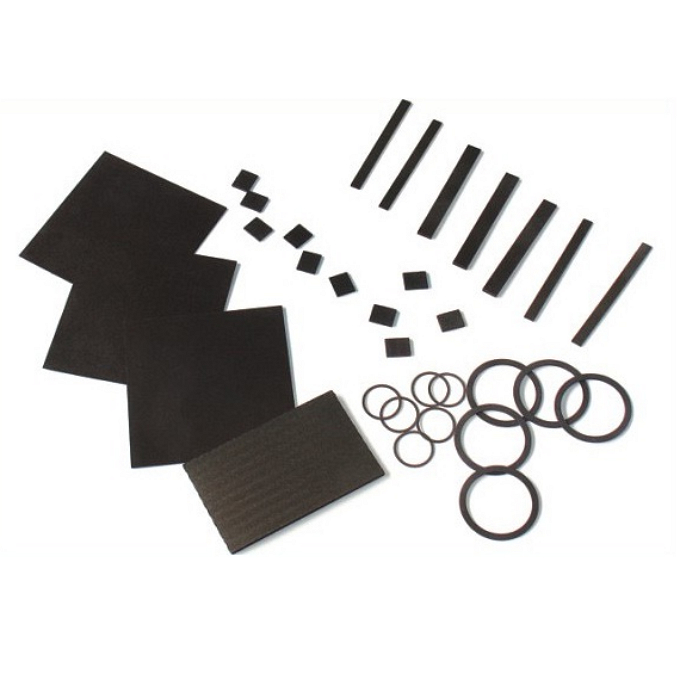
Neodymium flexible magnet – a high‑energy bonded NdFeB strip with rubber flexibility, delivering 1.5–8.5 MGOe for high‑torque motors, EVs, and servos.
Read More
Flexible ferrite rubber magnet strip – low‑cost anisotropic material for motor rotors, widely used in micro motors, fans, and automotive drives.
Read More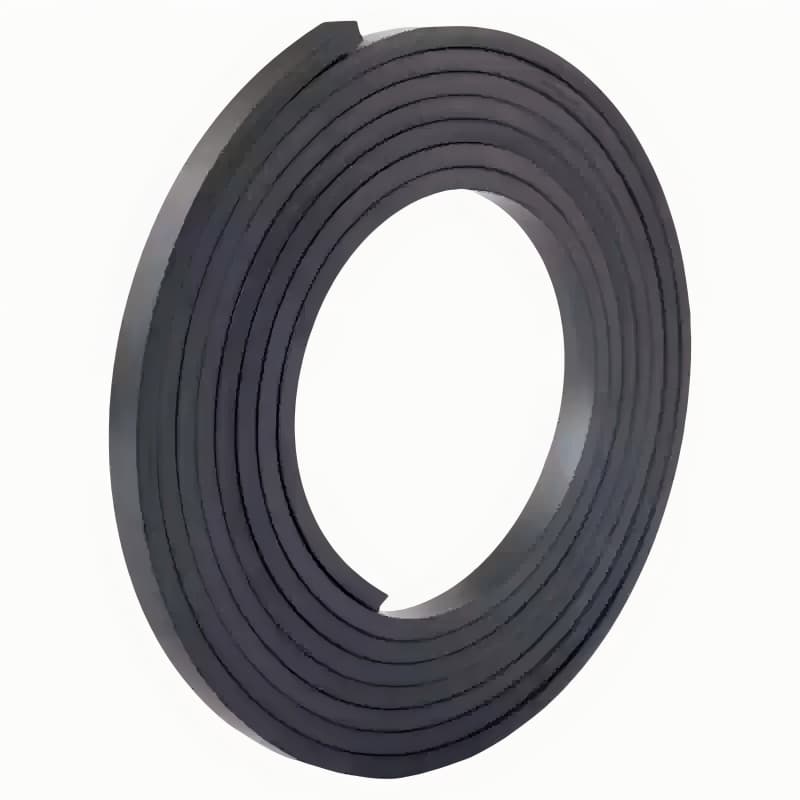
Neodymium flexible magnet combines high remanence, high coercivity, and flexibility, supporting 2–200+ pole multi‑pole magnetization in strips, rings, or custom shapes to fit various sensor designs. As a multi‑pole magnetic source, it delivers stable signals for encoders, speed sensors, and position sensors – particularly effective in compact spaces, making it a reliable choice for precision sensing.
Read More
Eco‑friendly strontium ferrite rubber magnet – heavy metal free, RoHS compliant – delivers stable signals for encoders, speed sensors, and position sensors with excellent cost‑performance and environmental tolerance.
Read More


 IPv6 network supported