What Are You Looking For?

Magnetic Sealing Strips – Technical Support
1. What is a Magnetic Sealing Strip?
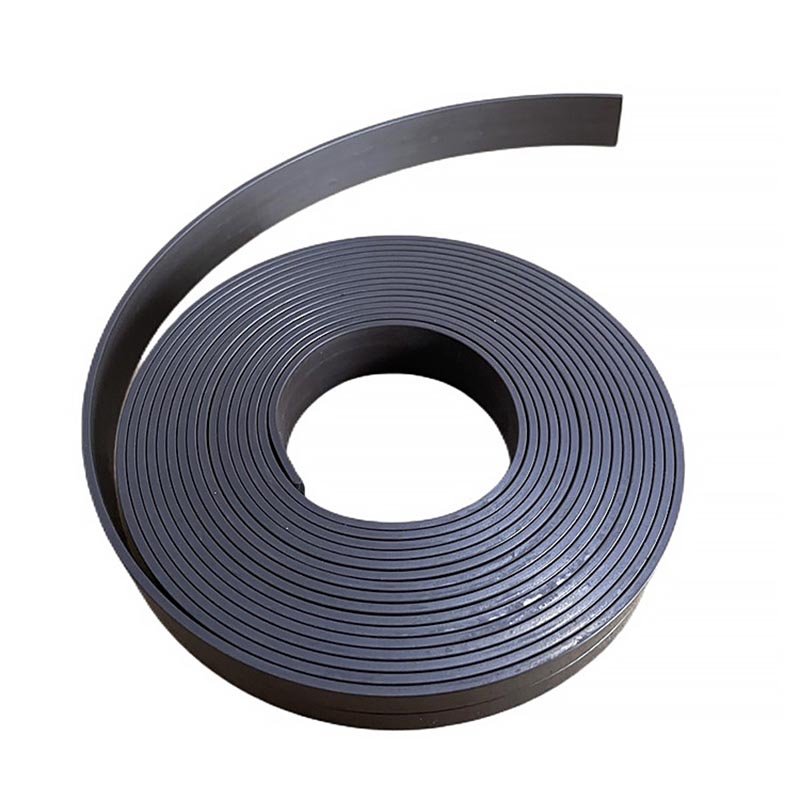
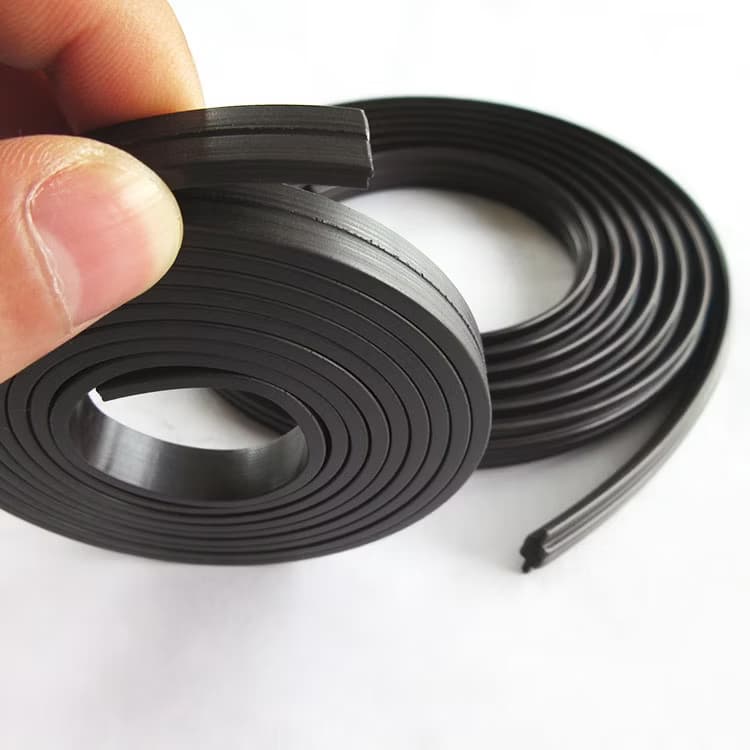
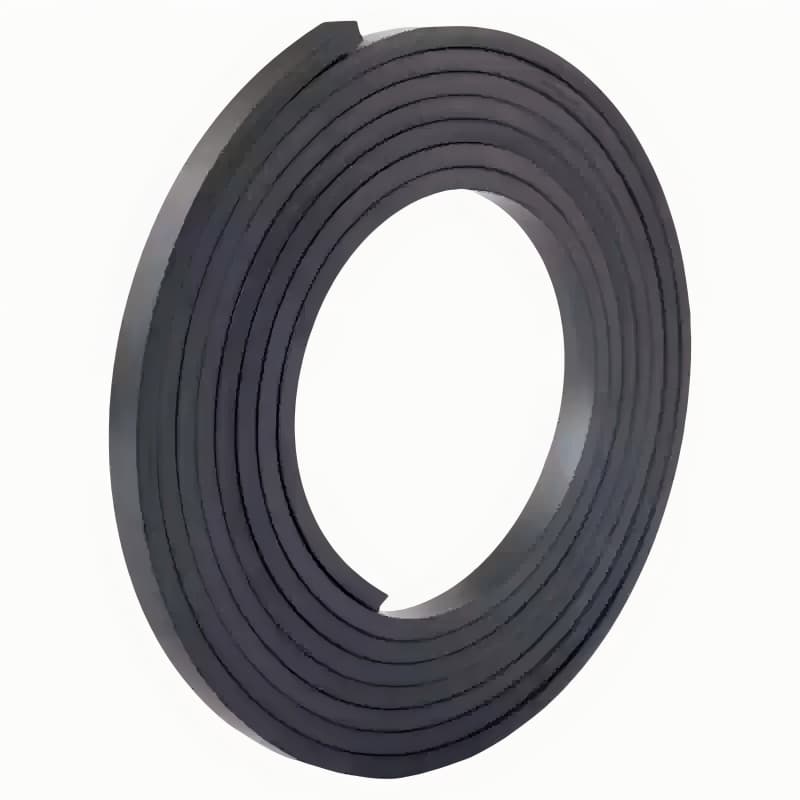
A magnetic sealing strip is a flexible, durable gasket engineered to provide an airtight and watertight seal using magnetic force – without mechanical latches. It combines the elasticity of rubber with the holding power of embedded magnets, making it ideal for applications that require frequent opening and closing while maintaining a perfect seal.
Product structure:
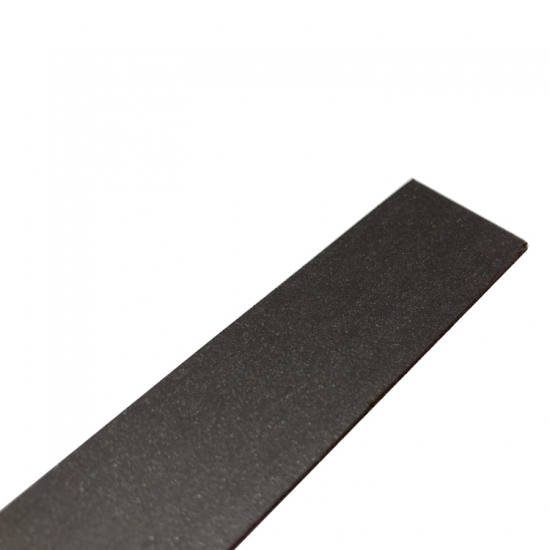
The strip consists of a flexible rubber/plastic body (typically PVC, CPE, or NBR) with an embedded anisotropic or isotropic ferrite magnetic strip. This construction delivers robust physical strength and flexibility – the strip can be cut, slit, punched, folded, or twisted without losing its magnetic properties.
How it works:
When placed against a ferromagnetic surface (e.g., a steel door frame), the magnetic strip creates a strong, uniform attraction force that pulls the gasket tight against the frame. This eliminates gaps, prevents air and moisture leakage, and improves energy efficiency – all without moving parts or complex hardware.
2. Key Features & Benefits
| Feature | Benefit |
|---|---|
| Magnetic closure, no latches | Smooth, quiet, wear‑free operation |
| Flexible & durable material | Withstands repeated flexing, twisting and temperature changes |
| Customizable dimensions | Available in any width, thickness, length, or profile (U‑channel, lipped, hollow) |
| Self‑adhesive backing (optional) | Easy peel‑and‑stick installation – no tools required |
| Wide operating temperature | Performs from -30°C to +80°C (customizable for extreme conditions) |
| RoHS, REACH, ISO 9001 compliant | Safe for global markets, certified quality |
3. Technical Specifications
The table below lists typical parameters for standard magnetic sealing strips. Custom values are available upon request.
4. Industry Applications
Our magnetic sealing strips are used across many industries. Below are the most common applications.
❄️ Refrigeration industry
Key benefit: Prevents cold air loss, reduces energy consumption, and eliminates door‑latch maintenance.
🚗 Automotive industry
Key benefit: Minimizes air and water leakage, reduces in‑cabin noise, and improves comfort.
🏠 Commercial & residential
Key benefit: Blocks drafts, dust, and noise with a clean, invisible magnetic closure.
🏭 Industrial equipment
Key benefit: Reliable sealing in harsh environments; easy tool‑free access for maintenance.
🧲 Custom solutions
Need a special shape or profile? We can extrude magnetic sealing strips into U‑channel, lipped, hollow, or any custom design to match your door or cabinet frame. Simply send us your 2D/3D drawing, and we will manufacture the perfect seal for your application.
5. Installation Guide
Follow these five simple steps to install your magnetic sealing strip correctly.
Step 1 – Clean the surface
The mounting surface must be clean, dry, and free of dust, oil, grease, or old adhesive. Use isopropyl alcohol (IPA) for best results.
Step 2 – Measure and cut
Measure the required length. Use ordinary scissors or a utility knife to cut the strip to size. The magnetic material cuts easily without fraying.
Step 3 – Peel (if adhesive‑backed)
If your strip comes with self‑adhesive backing, peel off the protective foil from the adhesive side. Avoid touching the adhesive with your fingers.
Step 4 – Align and apply
Carefully align the strip along the edge of the door or frame. Ensure the magnetized side faces the steel mating surface. Press firmly along the entire length, applying even pressure.
Step 5 – Let it set
For the best bond strength, wait at least 24 hours before subjecting the seal to heavy use, moisture, or extreme temperatures. During this time, avoid opening and closing the door aggressively.
⚠️ Important safety notice: Magnetic sealing strips can interfere with pacemakers, credit cards, mechanical watches, and magnetic storage media. Keep them at least 30 cm away from such items.
6. Troubleshooting Common Issues
| Problem | Possible cause | Solution |
|---|---|---|
| Door does not seal completely | Strip installed with wrong orientation | The magnetic side must face the steel frame. Flip the strip. |
| Gap too large for standard strip | Use a thicker strip or add a secondary sealing lip. | |
| Sealing strip fell off | Dirty or oily mounting surface | Clean thoroughly with IPA, then install a new strip. |
| Adhesive failed (old or cold) | Replace with fresh adhesive‑backed strip; apply at room temperature. | |
| Poor magnetic holding force | Magnet demagnetized (rare) | Test with a small steel object. Replace strip if magnetic pull is weak. |
| Wrong magnet type for application | Switch from isotropic to anisotropic for stronger pull. | |
| Strip permanently deformed | Excessive heat or chemicals | Verify operating temperature. Choose a material with higher heat/chemical resistance. |
| Noise or chattering | Loose fit or vibration | Use strip materials with lower hardness, or install a cushioning lip. |
Still having problems? Contact our technical team with a photo or short video – we will diagnose and propose a solution within 24 hours.
7. Certifications & Quality Assurance
We are committed to delivering safe, reliable, and compliant magnetic sealing strips.
| Certification | Scope |
|---|---|
| ISO 9001:2015 | Quality management system – from raw material to final inspection |
| RoHS | Restriction of hazardous substances (lead, mercury, cadmium, etc.) – essential for electronics and EU markets |
| REACH | Compliance with EU chemical regulations – all substances registered and safe |
| UL / CE (upon request) | Product safety and electromagnetic compatibility testing available |
All raw materials are traceable, and each production batch is tested for:
8. Frequently Asked Questions (FAQ)
Q1: What is the difference between isotropic and anisotropic magnetic sealing strips?
Q2: Can you produce custom profiles?
Yes. We can extrude magnetic sealing strips into almost any shape – U‑channel, L‑shape, hollow, lipped, or fully custom. Send us a drawing or sample, and we will make a mold and produce it for you.
Q3: What is your MOQ (Minimum Order Quantity)?
For standard strips (fixed widths/thicknesses), MOQ can be as low as 500 meters. For fully custom profiles, MOQ starts at 2000 meters. For sample orders, we can supply 10–50 meters.
Q4: Do you offer free samples?
Yes. We provide free samples of standard products (you pay only shipping). For custom samples, a small tooling fee applies, which is refundable against production orders.
Q5: How long does custom tooling take?
Typically 10–15 days for a new extrusion die. Sample production takes another 7–10 days. Mass production lead time is 20–30 days after sample approval.
Q6: Are these strips suitable for outdoor use?
Yes. We can add UV stabilizers and use NBR/PVC compounds with good weather resistance. For long‑term outdoor exposure, we recommend a protective coating or UV‑treated material.
Q7: What adhesive do you use for the self‑adhesive version?
We use high‑performance acrylic foam tape (3M or equivalent). It provides strong initial tack and long‑term durability from -20°C to +100°C.


 IPv6 network supported